The CEN-CENELEC Joint Technical Committee JTC21 has taken an important step toward understanding and improving diversity and participation within the European AI standardisation landscape. Through a comprehensive inclusiveness survey from June 2025, the committee gathered 146 responses from its members and observers—offering a valuable snapshot of who contributes to the development of AI standards and how they engage in this work. While the sample represents a substantial portion of the 195 eligible JTC21 participants, the dataset’s representativeness cannot be fully guaranteed. Still, the results provide rich insights into strengths, gaps and opportunities for more equitable participation.
Gender and Stakeholder Representation
The survey reveals that JTC21 benefits from the input of a broad crosssection of stakeholders, ranging from industry and academia to governmental bodies, NGOs, SMEs and independent experts. The two largest groups, industry & commerce and academia, highlight the committee’s strong technical and practical foundations. At the same time, government representatives, SMEs, and independent experts add important perspectives as the second largest groups. To be noticed also is the participation of NGOs and to a lesser extent Consumer organisations and Labour organisations.
Nevertheless, gender distribution remains uneven: 58% of respondents identify as male, 41% as female, and 1% as other. This pattern suggests ongoing challenges in achieving gender balance within technical standardisation.
Geographic Spread Across Europe
Contributors represent 21 countries and several transnational organisations, underscoring the panEuropean nature of JTC21. France leads the response count (23), followed by Germany and the UK (19 each), and significant input also comes from Italy and the Netherlands. Nordic, Baltic and Eastern European countries are present but with notably fewer participants, identifying a regional asymmetry that may merit targeted outreach.
Patterns of Participation in Working Groups
The level of engagement varies noticeably across the committee’s working groups. WG4 and plenary meetings attract the highest attendance (55% each), whereas participation in WG5 is lower (20%). WG2 (44%) shows strong involvement, while WG1 (31%) and WG3 (25%) maintain moderate levels of engagement. Please notice that experts can join several groups at the same time.
These variations likely reflect differences in technical focus, perceived relevance, and resource availability. The unevenness underscores the importance of ensuring that all working groups—regardless of topic—remain accessible, supported, and welcoming to a broad range of contributors.
Knowledge and Expertise
The results show an overwhelmingly strong command of English—92% rate their proficiency as good or excellent—confirming that language is unlikely to be a barrier for most members.
Understanding of the AI Act and Related Topics
Knowledge levels in substantive domains such as the AI Act, health and safety, and fundamental rights vary more widely. While many respondents report medium to excellent knowledge—for example 36% good and 32% excellent for the AI Act—there remains a significant cohort with only basic understanding in areas like fundamental rights (26% basic) or health and safety (20% basic)
Given the centrality of regulatory, safety critical and rights based issues in AI standardisation, these findings suggest that additional training, onboarding materials, and expert led sessions could further strengthen the committee’s collective expertise.
Experience in Standardisation: A Community of Both Veterans and Newcomers
One of the most striking findings is that 38% of respondents report no previous experience in standardisation work. At the same time, a substantial 35% have more than five years of experience, indicating a healthy mix of seasoned contributors and new voices. The presence of newcomers highlights the importance of clear, inclusive processes and mentoring opportunities to support knowledge transfer and build long term capacity.
Time Commitment Constraints
The survey also reveals that standardisation work competes with many other professional commitments.
- 46% spend five hours or fewer per week on JTC21 tasks.
- Only 4% work fulltime on AI standardisation, and similarly low figures apply to other AI standardisation committees.
Most members therefore contribute part-time—often fitting important technical and policy discussions into already full workloads. This reality underscores the need for predictable meeting schedules, well-structured documentation, and processes that respect limited volunteer time.
Higher participation to JTC21 plenary meetings
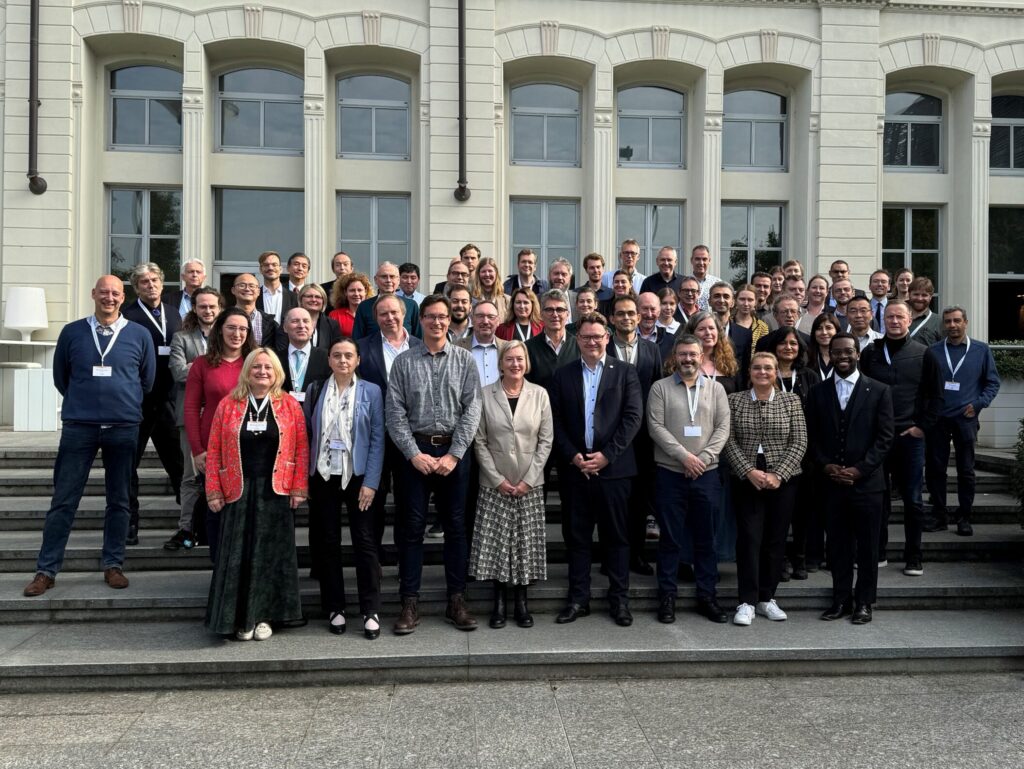
The first plenary meeting of JTC21 took place in June 2021. 93 people from 14 countries had registered to it. These numbers have steadily increased since then and reached 158 people from 21 countries for the 11th meeting in May 2025 (at the time of the survey) and 171 people from 24 countries in November 2025 for the 12th meeting. During the same period, the proportion of women has increased from 23% to 35% while the relative weight of the top three countries (Germany, France, UK) has decreased from 42% to 33%.
Toward a More Inclusive Future
The survey results paint a picture of a committee that is diverse in expertise, nationality, and professional background, yet still faces structural challenges to inclusiveness. Gender imbalance persists, regional representation is uneven, and expertise is distributed in ways that call for continued investment in capacity building.
At the same time, the community demonstrates strong commitment, high English proficiency, and a willingness to participate even with limited time—core ingredients for a thriving, inclusive standardisation ecosystem.
By strengthening onboarding, supporting newcomers, increasing targeted outreach, and ensuring equitable participation across working groups, JTC21 has a clear opportunity to continue building a standardisation environment that is not only technically excellent but also truly inclusive.